.png)
Periodontal Disease
What is Periodontal Disease?
Periodontal disease is a progressive infection of the gums and supporting structures around the teeth. As the disease progresses, inflammation becomes more destructive, causing gum recession, attachment loss, and bone damage.
Before periodontal disease develops, a pet's mouth should appear healthy and comfortable. The gums should be pink and tightly attached to the teeth, while the teeth themselves should be free of significant plaque or tartar.

Healthy Gums
-
Common Signs: Pink, firm gums; no bleeding; no swelling; no bad breath.
-
Reversibility: Normal condition, with no disease to reverse.
-
Tissue: Gums and supporting bone remain intact and stable.
The 4 Stages of Periodontal Disease
Periodontal disease can develop in 4 progressive stages:
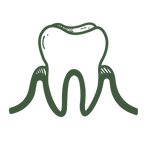
Stage 1 - Gingivitis
Gingivitis is the first, most common, and mildest stage of periodontal disease. Beginning with the accumulation of plaque on the surface of the teeth and along the gum line, the bacteria within the plaque irritate the gums, causing inflammation and reddening, without permanent damage to bone or connective tissue. In pets, this stage often develops quietly and may be unnoticed during a routine checkup.
-
Common Signs: Red or swollen gums, bleeding with brushing, and bad breath.
-
Reversibility: Can be reversible with improved oral hygiene and professional cleanings.
-
Tissue Changes: Inflammation and plaque buildup affect the gum tissue only; there is no permanent bone or attachment loss yet.

Stage 2 - Early Periodontitis
If left untreated, gingivitis progresses. As inflammation spreads deeper beneath the gum line, the gums begin to pull away from the teeth, forming spaces known as periodontal "pockets." Food, bacteria, and plaque begin to collect in the pockets, leading to possible infection. The surrounding bone becomes damaged by both bacteria and the immune system's response to infection.
-
Common Signs: Persistent bleeding, gum recession, and chewing and mouth sensitivity.
-
Reversibility: Unlike gingivitis, damage at this stage cannot fully heal on its own.
-
Tissue Changes: Early attachment loss and mild bone involvement.

Stage 3 - Moderate Perodontitis
At this stage, the symptoms of periodontal disease become more severe. As inflammation spreads, periodontal pockets are deeper, gums recede further, and there is an increased risk of tooth mobility or loss. In stage 3, the infection has moved further into the supporting structures of the teeth and the surrounding bone. This leads to significant attachment loss between the tooth and supporting structures, causing teeth to loosen and potentially abcess formation.
-
Common Signs: Noticeable recession, sensitivity, bleeding of the gums, and bad breath.
-
Reversibility: No longer reversible, treatment can help slow or stop further damage.
-
Tissue Changes: More connective tissue and bone are destroyed, and teeth may begin to shift.

Stage 4 - Advanced Perodontitis
Advanced periodontal disease is the most severe stage. By this point, there is extensive destruction of the tissues, ligaments and bone supporting the teeth. As a result, teeth become loose and have the potential to fall out, leaving space for infections within the oral cavity. This stage often requires dental treatment and possible extractions.
-
Common Signs: Severe gum recession, marked tooth looseness, pain, abscesses, chewing and bite changes, and possible tooth loss.
-
Reversibility: No longer reversible, treatment focuses on pain relief and preserving the remaining oral health of your pet.
-
Tissue Changes: Significant bone loss, deep periodontal pockets, severe attachment destruction, and instability of the teeth.
How is Periodontal Disease Prevented?
With proper care, periodontal disease is preventable and manageable in pets! Some measures that can be taken to help prevent this disease include:
-
Home Dental Care: Establishing regular home dental care for your pet can be crucial. While we understand it may be difficult, brushing their teeth daily with a pet-specific toothbrush and toothpaste can help remove plaque and prevent gingivitis. If your pet is difficult to have their teeth brushed, products such as approved dental treats, water additives, powders, and others are available to aid in maintaining oral hygiene.
-
Regular Dental Exams: Scheduling routine dental check-ups to assess your dog's oral health and catch signs of periodontal disease early on.
-
Comprehensive Oral Health Assessment and Treatment: An anesthetized assessment that involves complete oral exams, imaging, and professional cleaning and scaling to remove plaque and tartar, and discouraging the build-up.
How is Periodontal Disease Treated?
Treatment depends on the severity of the disease. Stage 1 can often be treated by routine teeth cleanings to help plaque accumulation, and applying products such as a plaque prevention gel, or adding plaque-fighting products to your pet's food and/or water. Later stages often require deeper cleanings, and sometimes the complete removal of the tooth surgically is necessary to provide relief.
